
Anxiety is often used synonymously with ‘worry’. It’s an unpleasant emotion felt by an individual when something, or a situation might pose to be ‘risky’, or ‘frightening’. Certain daily stressful situations may induce mild anxiety in individuals (for example, before a stage performance, or an important exam) and this is usually our body’s natural response, preparing us to act in difficult situations.
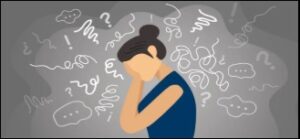
WHEN DOES ANXIETY BECOME A PROBLEM?
Anxiety becomes a problem when the symptoms start causing significant distress to the individual, and interfere with one’s daily life, and functioning.
HOW TO IDENTIFY ANXIETY (SIGNS & SYMPTOMS)
|
TYPES OF ANXIETY DISORDERS
|
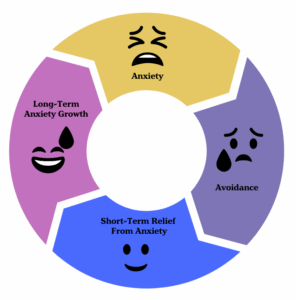
THE CYCLE OF ANXIETY
It is a cycle where an individual avoids their fears, and as a result, those fears become more intense. Further, avoidance becomes increasingly difficult to resist, which further worsens the anxiety. Anxiety treatments aim at breaking this cycle.
ANXIETY TREATMENTS: WHAT CAN BE DONE?
The first step to successfully manage anxiety is recognizing and addressing it. Mental health professionals – counsellors and therapists, and psychiatrists can work together, and help an individual manage the symptoms of anxiety. Some of the treatments and techniques for anxiety are Cognitive Behavioral Therapy (CBT), Exposure Therapy, Medication (psychiatrists can recommend medications, if needed), and Relaxation Exercises.
IN THE MOMENT Coping Skill Toolbox
Things to do when you feel anxious
These are a few things that can be included in a “coping skill toolbox”. You can try activities from this list, and also add things and activities that work for you:
🌷Slow in-and-out breathing
🌷 Rest your head on table or desk briefly
🌷Count backwards from 20
🌷Hug yourself
🌷Focus exactly and only on what you are doing right now without judging
🌷Tell yourself that your thoughts are just thoughts
🌷 Concentrate on a smell or a taste
🌷Use a squishy stress ball/ a fidget spinner if you’re feeling fidgety
🌷Think about something funny
SELF-HELP EXERCISES FOR ANXIETY
In addition to psychotherapy, a few other activities and habits can be included in one’s daily life as well. It may take trial and error to discover what works best for you:
- Download a mental health app that has relaxation and visualisation activities, or an introduction to mindfulness practises. These should be continued only if the individual feels better, or comfortable while doing these exercises.
- Try a grounding exercise when you feel anxious. Focus on your breathing, then identify:
5 things you can see, 4 things you can touch, 3 things you can hear, 2 things you can smell, and 1 thing you can taste. - Make a safety plan. This exercise can be done with the help of a professional, or a close acquaintance. The plan must list out your important contacts, coping strategies and what you can do when you’re feeling extremely anxious. Write out this safety plan on a piece of paper,/card you carry with you, or on your phone, so that you can refer back to easily.